
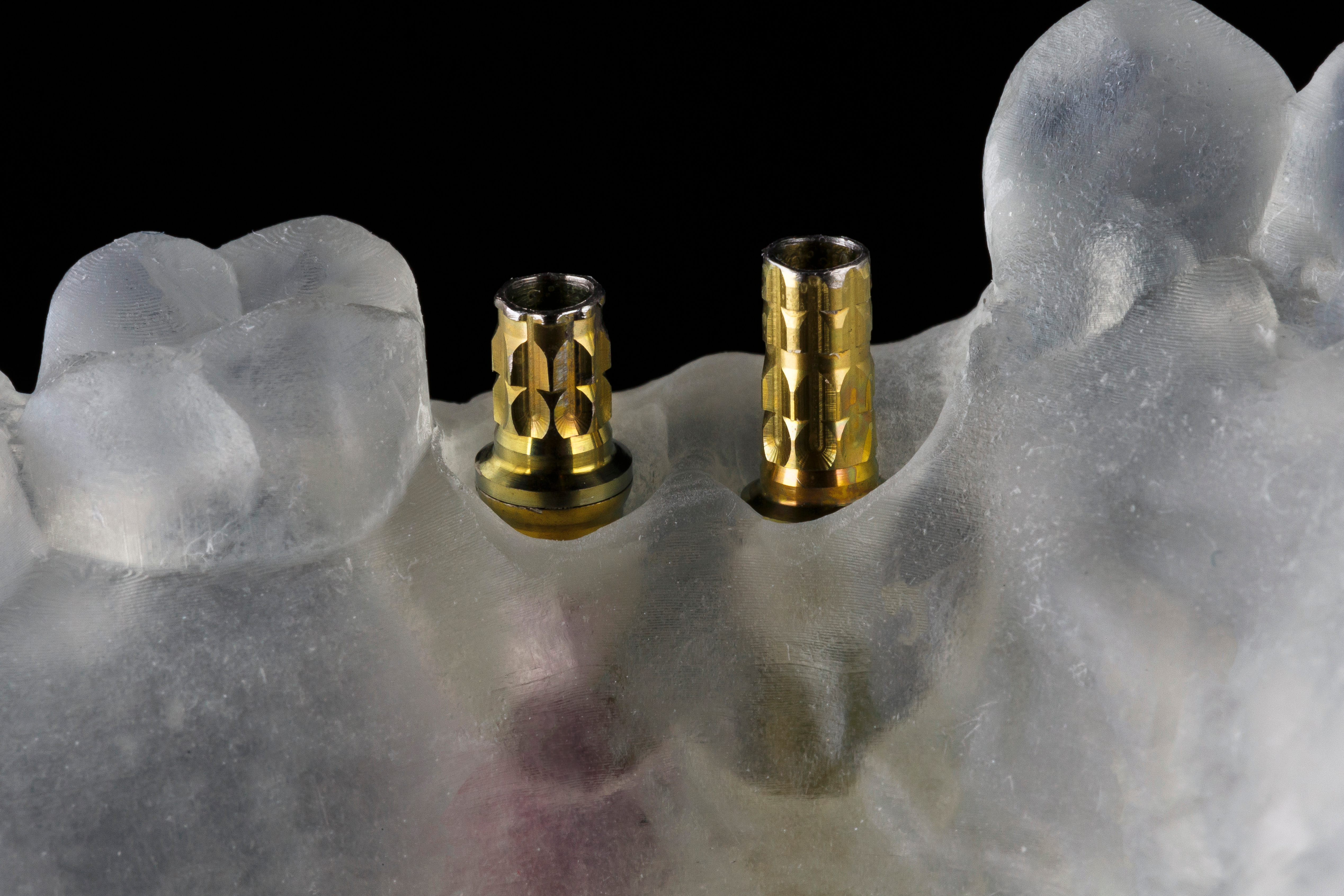
Verification protocols explained: ensuring accuracy in dental implants 3d printi
In the current landscape, digital dentistry has moved beyond being a future promise to becoming the standard for laboratories that prioritize efficiency and competitiveness. The process of dental implants 3d printing has redefined workflows, allowing a transition from an intraoral scan using scan bodies for dental implants to a high-precision physical model in just a few hours. However, this technological agility brings the responsibility of ensuring micron-level accuracy, as any deviation in the analog fit can compromise clinical success and the trust of the clinician.
This guide provides the necessary knowledge to master this transition, eliminating the uncertainties that often arise when integrating new additive manufacturing technologies.
The transformation of the dental lab through additive manufacturing
Adopting 3D printing technology does not just reduce turnaround times; it enables a level of customization previously unattainable. By integrating dental implant 3D printing solutions, technical teams can manage complex cases with a high level of predictability.
This digital transition requires recognizing that software, printers, and resins must function as a perfectly synchronized ecosystem to ensure the final result is both functional and precise.
The pillars of high-precision model production
To ensure reliable, accurately produced 3Dprinted implant models, it is essential to address three critical pillars that ensure the quality of the final product:
- Dimensional accuracy: it is vital to understand how thermal and chemical shrinkage of light-cured materials affects the final model outcome.
- Validated workflows: implementing standardized protocols eliminates the uncertainty of trial and error, saving operational costs and production time.
- Technical customization: no two printers are identical, making it necessary to adjust digital libraries to the specific conditions of each machine and each batch of resin.
The commitment to accuracy and the role of verification
The greatest challenge facing laboratories today is not the printing process itself, but the repeatability of optimal results. The industry has recognized that the use of dental implants 3d printing requires an additional calibration step that is often overlooked.
Without a proper verification system, technicians are forced to make manual adjustments that invalidate the precision of the digital design.
IPD has developed a solution specifically designed to solve this issue, simplifying the calibration process and ensuring that the fit between the printed model and the analog is always perfect.
Through an accessible verification protocol, the gap between virtual design and physical reality is closed, allowing any laboratory, regardless of size, to achieve industrial levels of excellence in their dental implants 3d printing projects.
The challenge of accuracy in 3d printed dental models
Precision in additive manufacturing is the determining factor that separates a successful digital workflow from an inefficient one. Although technology has advanced significantly, ensuring that a physical model accurately reproduces the spatial coordinates of a digital design remains the primary technical challenge in the field of dental implants 3d printing.
The inherent variability in printing processes can create discrepancies that, while seemingly insignificant to the naked eye, are critical when positioning prosthetic components with micron-level tolerances.
Critical variables affecting printed model fidelity
To Achieve excellence in 3d printed implant models, it is fundamental to understand that the final result does not depend solely on the nominal resolution of the printer, but on a series of interconnected factors:
- Material shrinkage: all dental resins experience a degree of chemical shrinkage during polymerization and subsequent thermal adjustment.
- Light intensity and wavelength: overexposure can thicken walls, underexposure can weaken the model.
- Print orientation: support stability and inclination affect geometric precision.
The impact of post-processing on dimensional stability
The process of printing implant models does not end when the printer finishes its cycle. The subsequent stages are often where the most severe deviations in precision occur:
- Model washing: excessive exposure to solvents can degrade resin surfaces.
- Final curing: uneven curing can warp the model and invalidate implant positioning.
Technical and economic consequences due to fitting issues
A poor implant analog fit in the printed model increases operational costs, delayed deliveries, and in many cases leads to remakes
When combined with a multi unit abutment, predictability, reliability, and accuracy are essential to maintaining profitability the patient’s implants, making repeatability essential for quality and profitability.
Conclusion: eliminating trial and error in dental 3d printing
By shifting the focus from manual adjustments to a standardized, scientific calibration, laboratories eliminate the risks associated with dimensional inaccuracies.
The result is a more efficient production cycle, reduced material waste, and prosthetic restorations that fit with absolute passivity.
Share this content