
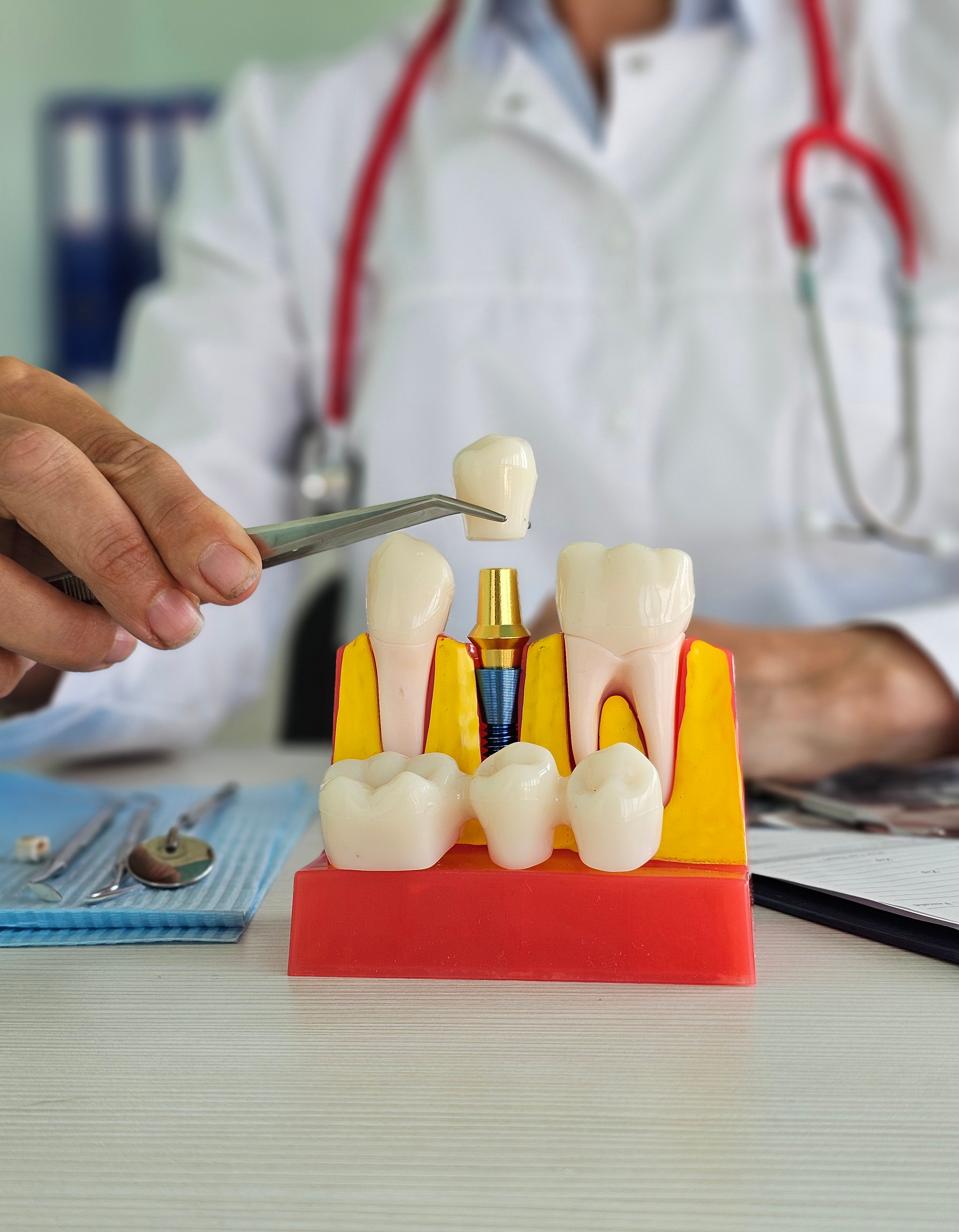
Digital implant workflow: precision and efficiency
The transition to digital workflows has evolved from a progressive choice into the gold standard for clinical and laboratory excellence.
When we talk about digitalization of implants, we are looking at a cohesive ecosystem where scanning technology, design software, and prosthetic components work in perfect harmony.
By moving away from traditional analog methods, we eliminate common frustrations like impression distortion and stone expansion. The result is a level of predictability in oral rehabilitation that allows higher precision and reliable results.
The paradigm shift in modern implantology
Embracing implantfocused digital workflows represents a profound transformation in how clinical teams and laboratories collaborate.
While conventional methods rely heavily on manual skill and materials that are sensitive to multiple variables, digital workflows are driven by accurate data acquisition.
This shift ensures that from the initial diagnosis to the final prosthetic delivery, there is a consistent flow of accuracy and predictability that remains uncompromised throughout the entire process.
Strategic advantages of workflow digitalization
Integration of digital workflows delivers tangible benefits that directly improve practice efficiency and patient satisfaction. Key advantages include:
- Reduction in treatment timelines: By eliminating physical impressions and logistical delays.
- Exceptional precision and passive fit: Digital workflows ensure higher precision, and predictability.
- An elevated patient experience: Faster, cleaner workflows eliminate discomfort associated with traditional impression.
The vital importance of system cohesion
For a digital implant ecosystem to function effectively, every component must operate with the same level of precision. Highend scanners alone cannot guarantee accuracy if the transfer components fail to meet equivalent standards.
Ultimately, true success depends on the seamless integration of scan bodies, titanium bases, and digital libraries, each working together to deliver predictable, repeatable results.
Digital libraries play a central role in achieving design precision. They serve as the system’s intelligence layer, storing exact geometric data that enables CAD software to identify implant positions with exceptional accuracy.
For a digital implant system to perform reliably, its libraries must be fully verified—ensuring that what appears on screen corresponds precisely to the final prosthetic structure.
The role of digital libraries in design precision
Digital libraries play a central role in achieving design precision. They serve as the system’s intelligence layer, storing exact geometry as the scan bodies helping CAD software to identify implant positions with exceptional accuracy.
For a digital implant system to perform reliably, its libraries must be fully verified—ensuring that what appears on screen corresponds precisely to the final prosthetic structure.
Stability and reliability in the laboratory phase
The process does not end with virtual design. Transitioning data into the physical world through printed models requires solutions that prevent micromovements and preserve fit.
This is especially critical in full-arch rehabilitations, where even the smallest deviation is magnified.
Why scan bodies are essential for accurate data capture
Every successful digital implant restoration begins with the quality of information gathered during scanning. A scan body is not just one of many abutments for dental implants; it is the bridge between physical reality and exact digital coordinates.
If this initial capture lacks accuracy, errors cascade through the entire workflow, compromising the passive fit of the final restoration.
The scan body as a precision bridge
IPD scan bodies are engineered with defined geometries that allow scanners to capture orientation, depth, and angulation with absolute fidelity.
This ensures the virtual model mirrors the patient’s anatomy, supporting both functional occlusion and gingival aesthetics.
Factors determining digital capture quality
Within an implant digital workflow, the following elements are critical:
- Component geometry and material: Defined planes and controlled reflection ensure accurate scanning.
- Visibility and contrast: Clear optical detection produces dense, reliable point clouds.
- Component stability: Absolute seating prevents micro-displacements during capture.
Optimizing the intraoral scanning protocol
To maximize efficiency, a strict protocol should be followed:
- Verify seating: Confirm full seating visually or radiographically before scanning.
- Control lighting: Avoid direct intense light that may saturate the scanner sensor.
- Manage soft tissues: Ensure the connection area is free of fluids or obstructions.
Seamless information processing in the CAD environment
Once captured, data flows directly into the CAD softwares for library selection, allowing recognition of implant platforms and connection types.
Conclusion: achieving successful rehabilitation with Implant Digital workflows
A digital workflow is more than a technological upgrade; it is an evolution toward predictability and clinical success.
When scan bodies, digital libraries, analogs, and titanium bases function as a unified system, precision is preserved from the first scan to final delivery.
This integrated approach transforms implant dentistry into a controlled, efficient, and long-term solution focused on patient health and professional confidence.
Share this content