
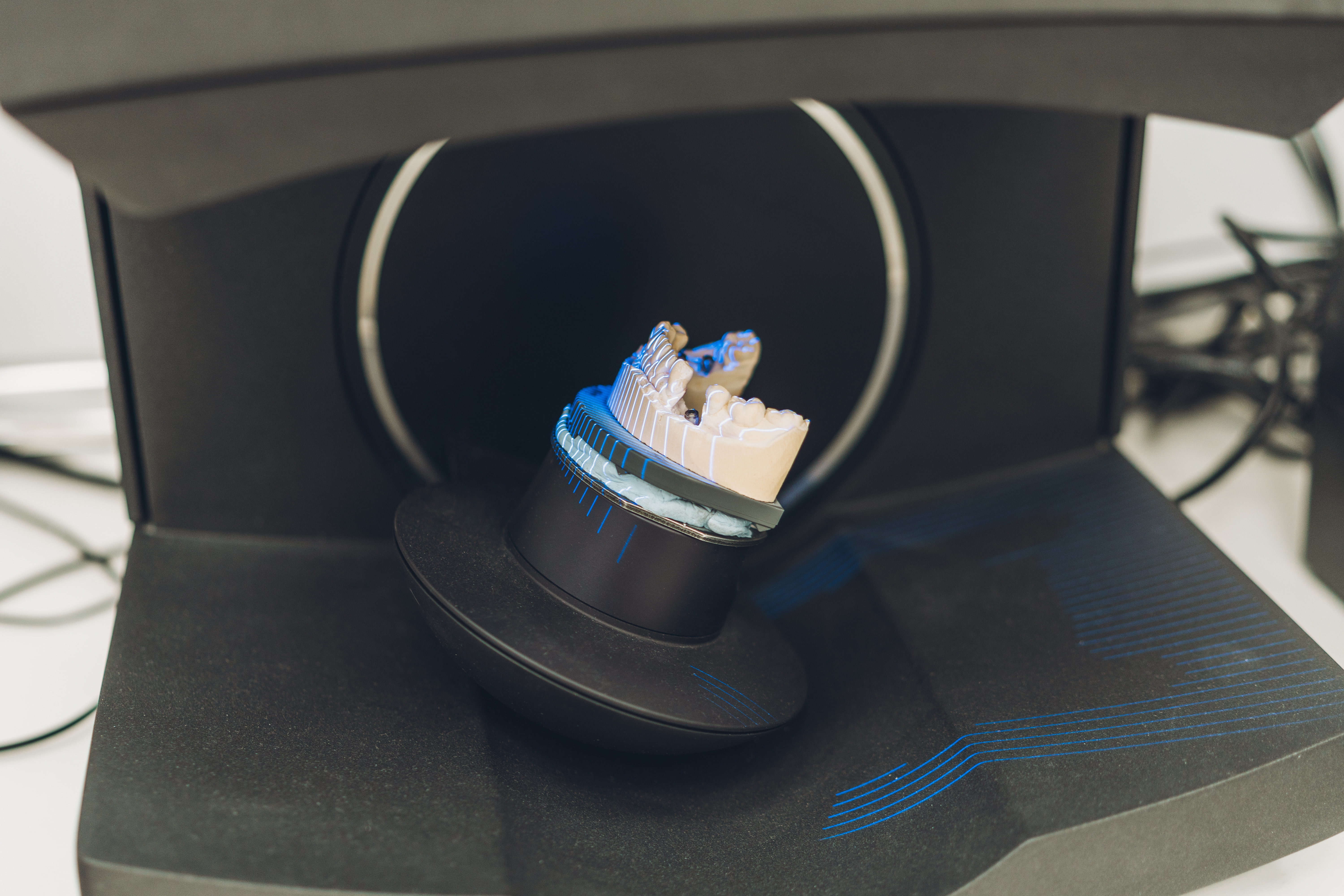
Why dental libraries are the foundation of digital accuracy
When you design an implant-supported restoration, you are looking for that specific sense of security that comes from knowing everything will fit with absolute passivity once it reaches the clinic. This success does not rely solely on owning the most expensive scanner or the latest software.
The real magic happens in an invisible layer where dental libraries act as the essential bridge between the data you capture in your patient's mouth and the final physical structure. If that bridge is flawed, even the most careful work loses its value. Understanding how these libraries process information is the first step toward raising the standard of your digital outcomes.
The shift from analog to digital: the role of the scan body
You likely remember the complexities of traditional impressions, where success depended on the stability of silicone or the precise expansion of stone. Today, the digital workflow has simplified those steps, but the responsibility of transferring the exact position of an implant has moved to a critical component: the scan body. This device tells the software exactly where the implant is located, its specific angulation, and its depth.
To make this communication work, the CAD software must constantly reference dental libraries. These databases are far more than just a collection of shapes; they are complex engineering files designed to interpret the light or contact data generated by a scanner. However, during this journey from the physical world to the virtual one, technology often introduces digital noise or artifacts that can distort reality if you do not have the right tools to compensate for them.
Why precision in CAD software starts with the quality of the library
Imagine trying to fit a puzzle piece into a slot that looks right but has been slightly enlarged. This is exactly what a CAD program experiences when it receives scan data with slight discrepancies. The final quality of your restoration is not decided at the milling machine, but at the exact moment the software aligns the scan body image with the information stored in the dental libraries.
- Geometric fidelity: a high-quality digital library must be an exact replica of the physical component, avoiding any simplifications that could put the final fit at risk.
- Software harmony: the integration should feel so natural that you hardly notice the complex calculations happening behind every click.
- Tolerance management: error margins must be accounted for from the beginning to ensure the final design is both functional and durable over time.
IPD’s commitment to micron-level excellence in implant dentistry
At IPD, we truly understand the daily challenges you face in the lab or the dental office. We know that even the most advanced scanner can produce small deviations that make achieving a passive fit a difficult task. For this reason, our commitment has always been to go beyond the conventional. We focus on how dental libraries can correct those tiny micron-level errors that, while they might seem insignificant, represent the difference between clinical success and a long-term complication.
By choosing our solutions, you are not just downloading a file; you are bringing years of research and development into your workflow. Our goal is to solve real-world problems, such as oversized scan data, so you can have the peace of mind that the implant position on your screen is a perfect, 1:1 reflection of what exists in your patient's mouth.
The hidden challenge of oversized scan data in modern dentistry
You have likely felt that specific frustration when, despite using a top-tier scanner and following every protocol, the final fit of a restoration isn't quite as perfect as you expected. It is a common hurdle in our field, and it often stems from a technical detail that rarely makes it into the equipment manuals: digital data is not a perfect mirror of the physical world.
Every time you capture a scan, you are dealing with a phenomenon known as "oversize," where the digital mesh becomes slightly larger than the actual component in your patient's mouth.
When your software tries to align this "swollen" data with standard dental libraries, the resulting discrepancy can compromise the entire project before you have even begun the design process.
The physics of scanning: where noise and oversize begin
To solve a problem effectively, we first need to look at its roots. Whether you prefer structured light or laser technology, every scanner interprets surfaces by projecting light and capturing its reflection. Factors such as the material of the scan body, the ambient lighting in the clinic, or even a tiny movement from the patient can create what we call digital noise. This noise essentially wraps the digital object in a thin, invisible layer of extra data.
Instead of a razor-sharp edge, the scanner produces a cloud of points that the software must connect to form a mesh. During this process, the software tends to round out corners and add volume to ensure the model has no holes. This extra volume is the oversized data we are talking about, and it is the primary reason why a scan body on your screen might look identical to the one in your hand, yet behave very differently when it comes to precision.
The 60-micron reality: why scanners deviate from the physical model
Clinical experience and various studies have shown that this deviation is not just a theoretical worry; it is a measurable gap that can reach up to 60 microns. In many industries, a few microns might be negligible, but in implant dentistry, they represent the thin line between a passive fit and a restoration that puts unnecessary stress on the implant-bone interface.
When you import these 60 microns of extra data into your workflow, you are essentially working with a "ghost" image that is larger than the actual titanium or PEEK component. Most dental libraries available on the market are built using the exact theoretical dimensions provided by manufacturers.
This means you are trying to fit a real-world, oversized scan into a perfect, theoretical box. Since the two shapes do not match perfectly, the software is forced to average the position, leading to a placement that is slightly off-center or tilted.
The pitfalls of standard alignment: when the software forces a fit
When your CAD software attempts to align an oversized scan with a standard library file, it typically looks for a "best fit" scenario. If the scan is 60 microns larger than the library file, the software tries to compensate by sinking the library deeper into the scan or shifting it to one side to find a mathematical equilibrium. This creates several issues that can turn a routine case into a complex one:
- Implant-axis changes: even a tiny misalignment at the scan body level translates into a significant tilt at the end of a long abutment or a full-arch bridge.
- Loss of passivity: the final prosthesis may feel tight or require heavy manual adjustments because its digital foundation was based on an inaccurate alignment.
- Unreliable vertical height: if the software cannot find a clear seat for the scan body, the vertical position of the implant may be miscalculated, leading to occlusal errors that are difficult to correct later.
Forcing a fit in a digital environment is just as problematic as forcing a bridge onto a model in the analog world. Without dental libraries specifically engineered to account for this hardware-induced growth, you will find yourself fighting against the data instead of letting it work for you.
How IPD dental libraries solve the problem of scan inaccuracy
Accepting that digital scanning is not a perfect science is actually your first step toward reaching a new level of clinical excellence. When you work with standard tools, you are often forced to manage a margin of error that makes achieving a truly passive fit feel like a game of chance.
At IPD, we decided to change that dynamic by moving away from the "one-size-fits-all" approach that has limited the industry for years. Our dental libraries are not just static files; they are engineered to adapt to the specific way your scanner captures light. By acknowledging the physical reality of data expansion, we provide you with a foundation that is as solid as the actual dental implant in your patient’s mouth.
Beyond the standard mesh: the innovation of multiple library sizes
Most conventional systems rely on a single digital file for each scan body, working under the assumption that every scanner will produce an identical, perfect result. You have likely seen how this theory fails when faced with reflections, different calibration levels, or how different software interpolates data.
When your scan data comes back slightly oversized but your library file remains fixed, the CAD software has to make a mathematical "best guess" to align them. This is where the risk begins.
The innovation behind IPD’s dental libraries comes from our understanding that a single mesh is simply not enough to cover the variety of environments in modern dentistry. By offering a range of options, we give the software a much more accurate target to aim for.
This eliminates the guesswork from the design stage, allowing you to feel the confidence that the virtual position on your screen is an exact replica of what is happening in the clinic.
The seven-mesh tolerances system: compensating for hardware-generated data expansion
The heart of our solution is a unique system that includes seven different mesh sizes for every single scan body. This isn’t just about having more options; it is a specific technical response to the 60-micron deviation that frequently occurs during the digital capture process. Each of these seven meshes is meticulously calibrated to account for the "swelling" of data that different scanners produce.
- Precision increments: the library allows you to select a specific mesh that matches the unique oversize profile of your scanning device.
- Seamless compensation: instead of trying to force a large scan into a small theoretical box, the software finds a natural match with a corresponding oversized library mesh.
- Hardware neutrality: whether you are using a high-end desktop scanner in a lab or a portable intraoral device in a clinic, these dental libraries provide the specific geometry needed to neutralize the errors inherent to that technology.
Recreating the real position: matching digital data to the physical mouth environment
The ultimate goal of using these specialized dental libraries is to recreate the implant’s real position with total fidelity. When you select the correct mesh size within your CAD software, the alignment happens naturally, without any forced distortion. This ensures that both the center of the implant and its rotational orientation are perfectly preserved from the start.
By matching the digital data to the physical reality of the mouth, you eliminate those tiny deviations that often lead to unintended implant-axis changes. These subtle shifts are often the hidden cause of long-term failure, as even a fraction of a degree in tilt can create tension in a bridge or cause a crown to require heavy adjustments.
With this approach, you are not just designing a restoration; you are engineering a high-precision medical device that respects the biology and mechanics of your patient. This level of control gives you the peace of mind to handle even the most complex cases, knowing your digital starting point is flawless.
The technical advantage: preventing implant-axis changes
Precision in digital dentistry is often a game of margins, where what happens at the base of an implant dictates the success of everything built above it. When you rely on dental libraries that don't account for the subtle expansion of scan data, you aren't just dealing with a minor fit issue; you are risking a fundamental shift in the geometry of the restoration.
At IPD, we have focused our engineering on preventing these silent deviations. By ensuring that the digital alignment is perfect from the very first step, we protect the structural integrity of your design, making sure that the final prosthesis performs exactly as you planned it in the software.
The ripple effect of misalignment: how a few microns change the final prosthesis
It is easy to underestimate the impact of a 60-micron discrepancy when you are looking at a magnified 3D model on a screen. However, in the physical world, that tiny gap at the implant interface acts as a pivot point. If the scan body isn't perfectly aligned within the CAD environment because the mesh was too small for the data, the software might tilt the virtual implant by just a fraction of a degree to find a "best fit."
This creates a ripple effect throughout the entire restorative chain. By the time you reach the occlusal surface of a long-span bridge or even a single crown, that microscopic tilt at the base has translated into a significant lateral displacement. This is why some restorations require unexpected chairside adjustments or, in the worst cases, fail to achieve the passive fit that is so vital for long-term bone health.
Eliminating deviations: ensuring the virtual implant position matches the clinical reality
The true power of our seven-mesh tolerances system lies in its ability to eliminate these deviations before they even start. When you use dental libraries that offer specific compensation for oversized data, you are providing the CAD software with the exact geometry it needs to "lock" the position correctly. There is no mathematical guessing and no forced averaging of surfaces.
- Preservation of the vertical height: matching the mesh size correctly ensures the software recognizes the exact seating plane, preventing occlusal errors.
- Rotational accuracy: for anti-rotational components, our libraries ensure that the hex or connection orientation is captured with 1:1 fidelity.
- True-to-life positioning: you can design with the peace of mind that the virtual axis of the implant on your screen is identical to the physical axis of the implant in the patient's mouth.
Software synergy: how IPD’s libraries integrate with leading CAD platforms
We know that your workflow depends on the tools you trust most, which is why our dental libraries are designed to feel like a native part of your favorite software. We have worked hard to ensure that this high level of precision doesn't come at the cost of complexity. Whether you are a power user of Exocad, 3Shape, or Dental Wings, our libraries integrate seamlessly into your existing interface.
The process is intuitive: you simply select the IPD library and choose the mesh size that best fits your scanning results. The software handles the rest, utilizing our optimized geometry to ensure a rock-solid alignment. This synergy between hardware, software, and our specialized library files means you can spend less time worrying about technical errors and more time focusing on the art and science of creating beautiful, functional smiles for your patients.
Comparative analysis: IPD vs. conventional dental libraries
Selecting your digital toolkit is a significant moment in your daily workflow. While most dental libraries appear similar during the initial download, their clinical performance tells a much different story once a case is on your bench. Most conventional libraries are built on the idealistic assumption that every scan is a perfect, 1:1 mirror of reality. At IPD, we have moved past that theory to address the actual physics of scanning. When you compare the two approaches, it becomes clear that the difference isn't just a technical detail—it is the deciding factor between a restoration that simply fits and one that is truly engineered for long-term biological success.
Accuracy benchmarks: why one-size-fits-all libraries lead to prosthetic failure
The primary limitation of traditional dental libraries is their rigid nature. Most manufacturers provide a single digital file for each component, representing the "nominal" or perfect CAD dimensions. If your intraoral or desktop scanner produces an oversized mesh—which is almost always the case due to light scattering—you are left with a significant data mismatch.
When you use these one-size-fits-all files, the software is forced to find a compromise. It tries to average the surface overlap, often resulting in a virtual implant position that is slightly deeper or more tilted than the physical reality. In the world of micron-level precision, this lack of flexibility is a direct path to prosthetic tension.
By the time the bridge is fabricated, those small errors have compounded, leading to a "tight" fit that can cause bone resorption or screw loosening over time.
Stability and predictability in full-arch and single-unit restorations
Predictability is what allows you to grow your practice and maintain high standards without the stress of "cross-your-fingers" deliveries. In single-unit cases, a standard library might occasionally get lucky, but in complex full-arch restorations, the errors inherent in conventional dental libraries become impossible to ignore.
- Cumulative error prevention: on a full-arch scan, small deviations at each implant site add up quickly. Our system allows you to compensate at every single point, ensuring the final framework drops into place with zero tension.
- Consistent rotational timing: because our libraries match the actual volume of your scan data, the hex orientation is far more reliable. This is critical for the long-term stability of single crowns.
- Passive fit as a standard: we have designed our system so that a passive fit isn't a happy accident but a predictable, repeatable result of your digital process.
Economic benefits: reducing chairside adjustments and remakes
We know your time is your most valuable asset. Every minute you spend grinding a contact point or adjusting occlusion chairside is a minute taken away from another patient. Even worse is the "silent killer" of profitability: the remake. Most remakes aren't caused by a lack of skill, but by poor data alignment in the initial design phase.
By integrating IPD’s specialized dental libraries, you are making an investment in your lab's efficiency and your clinic's reputation. When a restoration fits perfectly the first time, you eliminate the back-and-forth shipping, the extra appointments, and the frustration that comes with technical failures.
Our seven-mesh tolerances approach ensures that the digital work you do at the bench translates perfectly to the chair, protecting your bottom line and the trust your patients place in you.
Frequently asked questions about oversized scan data and precision
Navigating the world of digital dentistry often brings up specific technical questions, especially when you are aiming for micron-level accuracy. We know that transitioning to a more sophisticated workflow involves a learning curve, and you might be wondering how these adjustments fit into your current routine.
To help you gain full confidence in using our system, we have compiled the most common inquiries we receive from professionals who, like you, are committed to delivering the highest standard of prosthetic fit through our dental libraries.
Does every intraoral scanner produce oversized data?
In short, yes. While the degree of deviation varies between brands and technologies, the phenomenon of "oversize" is an inherent part of the light-capture process. Whether a scanner uses structured light or laser triangulation, it must interpret surfaces that are often reflective or moist. To ensure a continuous mesh without holes, the software algorithms typically "pad" the data.
This means that even the most expensive and highly calibrated scanners on the market will generate a digital file that is slightly larger than the physical object. Recognizing this reality is not a criticism of the hardware, but a necessary step in choosing the right dental libraries to compensate for these unavoidable physical limitations.
How do I know which of the seven mesh tolerances to use for my case?
Selecting the ideal mesh size is a straightforward process once you understand your equipment’s profile. Most of our users find that their specific scanner consistently produces a similar level of deviation.
- Initial testing: we recommend running a test case with a known physical model to see which of the seven library sizes provides the most passive fit.
- Scanner profiles: some high-end desktop scanners may require a mesh closer to the nominal size, while certain intraoral scanners known for high "noise" will benefit from our more compensated options.
- Technical support: our team has analyzed data from the most popular devices on the market and can provide you with a recommended starting point based on the specific scanner you use in your daily practice.
Are IPD libraries compatible with Exocad, 3Shape, and Dental Wings?
We understand that your workflow is built around specific software platforms, and any new tool must integrate seamlessly to be effective. Our dental libraries are fully optimized for the industry's leading CAD environments.
We provide dedicated files specifically formatted for Exocad, 3Shape, and Dental Wings, ensuring that the integration feels native and intuitive. When you load our libraries into your system, you will see the different mesh options clearly labeled, allowing you to maintain your usual design speed while benefiting from a level of precision that standard, generic libraries simply cannot offer.
Conclusion: achieving predictable results through digital engineering
At IPD, we believe that the true value of technology is not found in the tools themselves, but in the confidence they provide to the professionals who use them. Digital dentistry has opened doors that were previously unimaginable, yet it has also introduced new layers of complexity that require a specialized approach.
By choosing to work with our dental libraries, you are not just adopting a digital file; you are embracing a philosophy of precision that acknowledges the nuances of the physical world. Our goal is to ensure that your talent and dedication are reflected in every restoration, with a fit so perfect that it feels like a natural extension of your clinical expertise.
The future of implantology: why data compensation is no longer optional
The industry is moving at a rapid pace, and the standards for what constitutes a successful restoration are higher than ever. It is no longer enough for a bridge or a crown to simply "stay in place." We now understand that long-term biological stability depends on a level of passivity that can only be achieved by neutralizing digital errors at their source.
As scanning technology continues to evolve, the demand for more intelligent dental libraries will only grow. Relying on static, uncompensated data is becoming a risk that modern laboratories and clinics can no longer afford to take. The future of our field belongs to those who prioritize data integrity and understand that the bridge between the clinic and the lab must be built on a foundation of absolute accuracy.
Elevating your practice with IPD’s precision-first methodology
Your reputation is built on the results you deliver to your patients every single day. We know how much effort goes into every case, and we are committed to providing the technical support you need to make your workflow as smooth and predictable as possible. By integrating our seven-mesh tolerances system into your routine, you are protecting your work from the silent deviations that lead to stress, remakes, and mechanical complications.
- Reliability: experience the peace of mind that comes from knowing your digital designs will translate perfectly to the physical mouth.
- Innovation: stay at the forefront of the industry by using tools designed to solve the real-world problems of modern hardware.
- Partnership: remember that at IPD, we are more than just a manufacturer; we are your partners in the pursuit of excellence.
We invite you to experience the difference that a precision-first approach can make in your daily life. Let our dental libraries handle the complexities of data compensation so you can focus on what you do best: creating exceptional restorations that improve the lives of your patients. Together, we are setting a new standard for what is possible in digital implant dentistry.
Share this content